Empty Units, New Neighbours: The Churn Reshaping Britain's High Streets
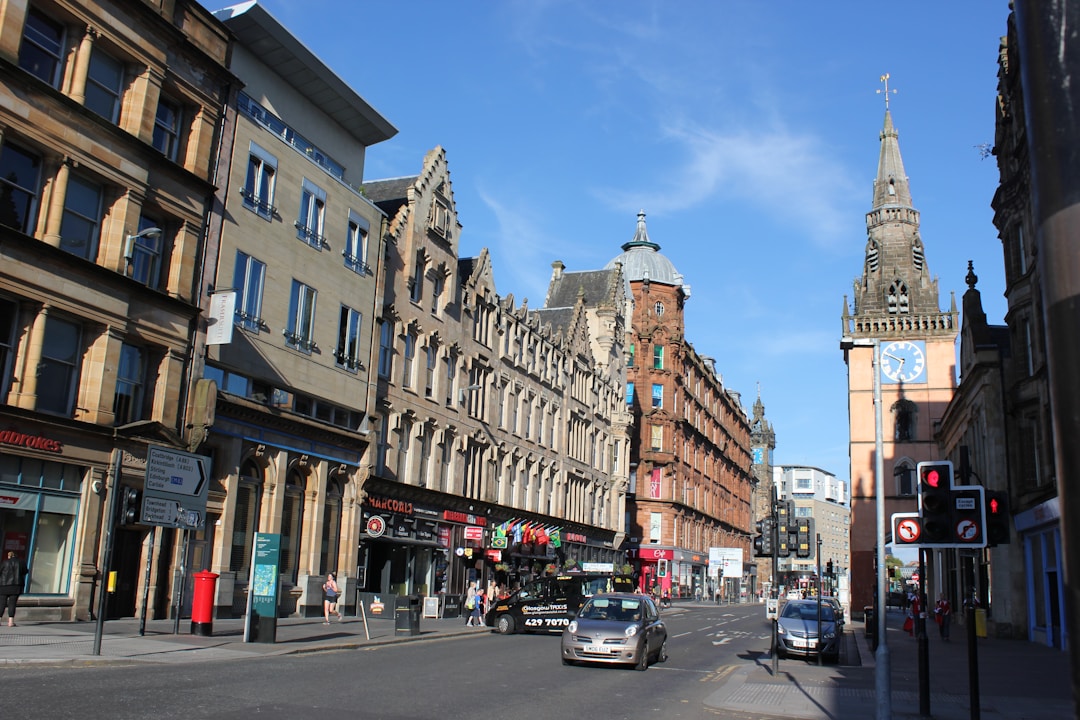
Walk any British high street on a Tuesday morning and you will see two things at once. The shuttered unit with the faded letting board and a drift of takeaway menus behind the glass. And, four doors down, a van with its back doors open, two people carrying a reception desk over the threshold of a shop that was something else entirely six weeks ago.
We tend to talk about high streets in the language of decline. Vacancy rates, boarded frontages, the departure of another familiar name. The Centre for Retail Research counted 13,479 shop closures across the UK in 2024 — the equivalent of roughly 37 every day. It is a tidy narrative and it captures something real. But it also misses what is actually happening on most parades, in most market towns, on most secondary shopping streets across the country. The dominant condition of the modern high street is not emptiness. It is movement.
Units turn over faster than they used to. Leases are shorter, occupier types are more varied, and the gap between one business leaving and another arriving has compressed from months into weeks. A unit that once housed a single department store concession for fifteen years might now see three different occupiers in five. That is churn, and it has quietly become the operating rhythm of town centre property rather than an aberration within it.
This matters because churn behaves differently from decline, and the two are routinely confused. A street with high turnover and rapid re-letting is a functioning market. A street with the same vacancy percentage and units that sit dark for years is something else altogether. The headline figure cannot tell you which one you are looking at.
Over the following sections we will pull that distinction apart. We will look at what vacancy statistics actually measure and what they hide, examine how the composition of high street occupiers has shifted from selling goods to delivering services, step inside the handover window when a unit belongs to nobody, and finally reconsider turnover not as a symptom of failure but as the infrastructure a high street now runs on.
Reading the Vacancy Rate: What Empty Shopfronts Actually Measure
The vacancy rate is the number everyone quotes and almost nobody interrogates. It arrives as a clean percentage — a figure for the town, the region, the nation — and it carries an implicit promise: that it tells you how healthy a high street is. It doesn't. It tells you how many units happened to be empty on the day somebody counted.
That distinction is not pedantry. It is the difference between a street that is dying and a street that is simply busy.
The problem with counting on a given Tuesday
Vacancy data is captured through periodic surveys — physical or desk-based audits carried out at fixed intervals, typically quarterly or twice-yearly. The widely quoted BRC–Local Data Company Vacancy Monitor, for instance, is built on field-researched data covering Britain's top 650 town centres, with researchers physically auditing occupancy status at set intervals. Someone walks the street, or reviews the records, and marks each unit as occupied or not. It is a photograph, not a film.
Consider what that misses. A unit that closes in April and reopens under a new occupier in June may never appear in the data as vacant at all, if the survey dates fall either side of that window. Meanwhile, a unit that is mid-handover on survey day — cleared of its old fittings, waiting for the incoming tenant's shopfitters to start — is logged as empty, despite the lease being signed and the fit-out scheduled. Two units, opposite trajectories, and the statistics record the healthier one as vacant.
Multiply that across a parade and the headline figure starts to look less like a diagnosis and more like a coin toss. It also explains why the national picture appears so immovable: BRC–LDC figures put the high street vacancy rate at 13.8% in Q1 2023 and 13.9% in Q2 2023, barely shifting despite enormous underlying activity.
Two kinds of empty
The more useful split is between structural and frictional vacancy, and it is rarely made in public discussion.
Structural vacancy describes units that have been dark for years and show no realistic prospect of change. The causes are usually physical or ownership-related rather than economic: fragmented freeholds where nobody can agree terms, awkward floorplates too deep or too narrow for modern occupiers, upper floors with no independent access, or buildings where the cost of bringing services up to standard exceeds any achievable rent. Analysis for the British Property Federation found that units vacant for over three years have risen across every location type, with shopping centres worst affected — 6.9% of all shopping centre units falling into that persistently vacant category.
Frictional vacancy is the opposite. These units are empty because they are between tenants — a few weeks of clearance, refit and reopening. They are not evidence of a broken market. They are evidence of a working one.
A town with a 15% vacancy rate composed almost entirely of frictional gaps is in robust shape. A town with the same figure made up of long-dormant structural voids has a genuine problem. The balance between the two has shifted noticeably: of shops reoccupied after a vacant period between 2017 and 2019, 46% had been empty for longer than a year, but for the 2021 to 2023 period that figure had climbed to 63%. The percentage alone cannot distinguish between them.
When falling numbers mean fewer units, not more shops
There is a third wrinkle worth flagging. Vacancy rates can improve without a single new business opening.
If former retail units are converted to residential use, demolished, or absorbed into adjacent premises, they leave the retail stock entirely. The denominator shrinks. The percentage falls. Nothing has been let. Government figures show this route growing steadily, with homes delivered by converting commercial, business and service premises to residential rising from 454 in 2022–23 to 803 in 2023–24 and 1,048 in 2024–25 on provisional numbers. A town losing units to conversion can report improving vacancy while its trading floorspace quietly contracts — a statistical recovery with no shoppers attached.
What the pavement tells you before the spreadsheet does
If you want a faster read on turnover, watch the kerb. The frequency of commercial removals activity along a parade — vans loading out old fittings on a Monday, new stock arriving on a Thursday — is a real-time indicator that no quarterly survey can match. Physical handover happens weeks, sometimes months, before it registers in published data. The lorries know first.
From Fashion Rail to Treatment Couch: Who Is Actually Moving In
Ask someone what has replaced the shops on their local high street and you will usually get a shrug and the word "coffee". The reality is more interesting and considerably more varied. The units are refilling — just not with retail.
Walk a typical secondary parade and count the occupier types. Barbers and nail bars. Vape shops. Tattoo and piercing studios. Dental practices and aesthetic clinics offering everything from teeth whitening to injectables. Veterinary surgeries. Physiotherapy and podiatry providers. Opticians, audiologists, hearing centres. Independent gyms and boutique fitness studios tucked into former electrical retailers.
What these have in common is that you cannot order them online. That is the whole logic of the shift. The high street has been steadily emptied of transactions that a delivery van can complete and refilled with services that require a person, a room and an appointment. Local Data Company research has repeatedly placed barbers among the fastest-growing categories in the country, with a net increase of 665 units in 2023, alongside nail salons up 302 units and beauty salons up 254. It is not a decline in occupancy. It is a change in purpose.
Buildings designed for one job, doing another
Here is where it gets physically awkward. Retail units were built around a specific choreography: an open frontage to pull people in, a deep uninterrupted floor for displays, a till point near the door, a stockroom at the back. Everything about the shell assumes goods on show and customers browsing freely.
Service occupiers want almost the opposite. They need privacy, not visibility. Treatment rooms with solid partitions. Plumbing runs to sinks and basins that the original layout never anticipated. Separate waiting areas with seating. Consultation booths. Clean and dirty zones for anything clinical. Sound insulation, because nobody wants their hearing test audible from the reception sofa.
Converting a long, narrow shop unit into three treatment rooms plus a waiting area is a substantial construction job, not a cosmetic refresh. Partitions go in. Services get extended to points they were never designed to reach. Ventilation has to be reconsidered. The frontage — that lovely wide glazed window — often ends up filmed, frosted or boarded internally, which is why converted units so frequently look blanker from the street than the shops they replaced.
Not all occupiers churn at the same speed
The composition shift also changes how often units turn over, and this is where parades develop their own distinct rhythms.
Heavy fit-out occupiers stay put. A clinic that has spent significantly on partitioning, plumbing and specialist equipment has every reason to see out a long term and renew. The investment is sunk into the fabric of the building and cannot easily be lifted out and taken elsewhere. These tenants anchor a street, and the money behind them is not trivial — the British beauty and personal care sector alone has been valued at a £24.5bn contribution to UK GDP.
Light fit-out occupiers move constantly. Discount retailers, seasonal traders, independent fashion and gift shops, pop-up operators — businesses whose entire presence amounts to rails, shelving units, a card reader and stock. Low commitment in, low friction out. Independents dominate this churn: of the shop closures recorded across 2024, some 11,000 were independent retailers, accounting for around 84% of the total.
The result is that two units side by side can operate on entirely different clocks. One hasn't changed hands in a decade. The other has seen four occupiers since 2021.
Different tenants, different clear-outs
This composition change reshapes the practical work of turnover too. Clearing a departed clothing retailer means stripping gondola shelving, rails, mannequins, fitting room partitions and a stockroom's worth of racking — high volume, low complexity. Clearing a clinic means dismantling fixed cabinetry, disconnecting equipment and handling specialist items with care.
Commercial removals on a modern high street therefore vary enormously in nature from door to door, and the occupier mix on any given street effectively determines what that work looks like.
The Handover Window: Inside the Weeks When a Unit Belongs to Nobody
There is a strange interlude in the life of every high street unit. The old tenant has gone. The new one hasn't started trading. The keys are back with the landlord or already with the incoming occupier's contractor, and for a few compressed weeks the premises exist in a kind of limbo — no signage, no staff, no customers, just a rolling queue of trades trying to work in the same confined space without tripping over each other.
This is where turnover actually happens. Everything discussed so far — the vacancy statistics, the shift in occupier types — resolves into this window. Get it right and a unit is back in use in a month. Get it wrong and it sits dark for a season. The margin for error has narrowed sharply: only 9% of shops reoccupied between 2021 and 2023 had been empty for less than six months, down from 22% in the 2017 to 2019 period.
Strip-out sets the clock for everything else
The sequence almost always begins with the outgoing occupier's obligations. Dilapidations require them to remove their fit-out, take down signage, clear equipment and generally return the unit to an agreed condition. Until that clearance is complete, very little else can begin.
Why does this matter so much? Because the incoming tenant's design team cannot survey and measure accurately around somebody else's shelving. Dimensions taken with partitions still standing produce drawings that don't fit. Shopfitters quoting from a half-cleared unit build contingency into their pricing. The strip-out is not merely the first job on the list — it is the job that determines when every subsequent job can be scheduled.
Delays here cascade. A week's slippage in clearance rarely costs a week overall. It costs whatever gap opens up before the shopfitter's next available slot.
The constraints that make high street work uniquely fiddly
Anyone who has moved an office out of a business park has no idea how easy they had it. Town centre premises impose restrictions that simply don't exist elsewhere:
- Pedestrianised zones with loading windows that close at nine or ten in the morning, forcing everything onto an early start.
- Shared service yards behind parades, where three businesses need the same access point on the same morning.
- Single-width shopfronts and no rear access at all, meaning everything comes and goes through the front door, across a public pavement, in view of shoppers.
- Upper floors with no goods lift — often no lift of any kind — where stock, furniture and fittings travel by staircase.
- Neighbouring traders whose businesses cannot be blocked, obstructed or drowned out while they are trying to serve customers.
These are not minor irritations. They dictate crew sizes, vehicle types, working hours and how long a straightforward clearance actually takes.
Everything happening at once
Landlords typically grant a rent-free period for fit-out, and it is rarely generous. That commercial pressure produces the defining characteristic of the handover window: overlap.
In a properly compressed schedule, you can find strip-out finishing in the back of a unit while first-fix electrics are underway in the middle and new fittings are being delivered to the front. Signage installers arrive before the paint has fully cured. Opening stock lands the day before trading starts because there is nowhere to store it any earlier.
Commercial removals sit inside this sequence as one trade among several — arriving between the shopfitters and the electricians, working to a slot rather than a day, and coordinating access with everyone else queuing for the same doorway.
Churn as Infrastructure: Why Turnover Is Now the Business Model
We have been looking at high street change as a series of events — a closure here, an opening there, each one worth a paragraph in the local paper. That framing is out of date. Turnover is no longer something that happens to a high street. It is how a high street runs.
The lease got shorter and nobody quite noticed
The single biggest driver of this is contractual. The long institutional lease — fifteen or twenty-five years, upward-only reviews, a tenant tied in for the duration — has largely retreated from secondary town centre property. What has replaced it is a patchwork of shorter terms: five years with a break at three, three-year agreements, rolling licences, turnover-linked arrangements where rent flexes with trade, and meanwhile-use deals lasting months rather than years. Industry guidance now puts the average UK commercial lease length at around 3.7 years as of 2025, and break clauses are being used in earnest — roughly 41% of businesses holding longer leases exercised a break option across 2024/25.
The consequence is arithmetic. A unit that once saw one occupier across two decades may now see four or five. The building hasn't changed. The frontage hasn't changed. The commitment behind the door has, and that alone multiplies the amount of physical change a street absorbs.
Shorter leases also lower the barrier to entry, which is why the occupier mix has become so much more experimental. Businesses that would never have signed a fifteen-year term will take three years. Some thrive. Many don't. Both outcomes produce movement.
What a street needs in place to keep up
Here is the part that rarely gets discussed. A high street cycling occupiers at speed depends on a support ecosystem that is entirely invisible from the pavement — and where that ecosystem is thin, units stay empty far longer than demand alone would suggest.
What does that ecosystem consist of?
- Accessible local storage, so departing tenants have somewhere to put stock and fittings without needing their next premises secured first.
- Shopfitting capacity within reasonable travelling distance, since a fitter based sixty miles away prices in the journey and schedules around it.
- Waste and clearance services able to handle a full strip-out at short notice.
- Sign-makers who can turn a fascia around in days rather than weeks.
- Logistics providers — commercial removals firms among them — willing to work to compressed windows and awkward access rather than only comfortable, scheduled jobs.
Where these exist in density, a unit can go from vacated to trading in four weeks. Where they don't, the same unit takes four months, and the vacancy figures record a problem that is actually a supply-chain gap. It is worth noting that none of this capacity is sustained by shops alone. The storage yards, the van fleets and the short-notice clearance crews are kept viable largely by households, and the weeks that follow a residential move draw on precisely the same local infrastructure a shop unit needs to reset. Towns with high residential turnover tend, almost incidentally, to have the logistics depth their high streets depend on.
Stop asking how many. Start asking how long.
This suggests a better question than the one we usually ask.
"How many units are empty?" is a snapshot that tells you almost nothing on its own, as we established at the outset. "How quickly does an empty unit refill?" is a measure of function. It captures demand, deal-making speed, physical suitability of the stock, and the availability of everything needed to reset a unit — all in a single figure.
Two streets can report identical vacancy rates. On one, the average void lasts six weeks. On the other, eighteen months. Nobody would confuse them standing on the pavement. Our statistics do it routinely. It is worth noting how stable those headline numbers can look while the underlying market moves: high street vacancy edged only from 14.5% to 14.0% across a full year of significant repositioning, according to Local Data Company monitoring.
Speed, not stillness, is what health looks like now.
The Van Outside Is the Story
The next time a headline announces that a certain percentage of shops in your town are empty, resist the urge to read it as an obituary. Ask instead how long those units have been dark, what type of business last occupied them, and whether anything is physically stopping the next tenant walking in. Those three questions will tell you more than the percentage ever could.
For anyone with a practical stake in this — landlords, agents, town centre managers, or a business owner eyeing up a unit — the useful takeaway is that speed is a variable you can influence. Get the dilapidations position agreed early rather than argued over at handover. Book the strip-out before the lease has been signed, on the reasonable assumption it will be. Survey the unit properly once it is genuinely clear, not optimistically while shelving is still standing. Know your access constraints — loading hours, yard sharing, staircase widths — before contractors quote, not after they arrive. Line up storage, clearance and removals capacity as a sequence rather than a series of last-minute phone calls. None of this is glamorous, and all of it compresses weeks into days.
The wider point is a change of posture. We have spent fifteen years mourning high streets as though they were fixed things that occasionally break. They are not. They are systems in constant motion, and their vitality shows in how briskly they absorb change rather than how successfully they avoid it. A parade where units turn over regularly and refill quickly is doing precisely what a functioning property market should.
So when you walk past that van with its back doors open, blocking half the pavement on a Tuesday morning while somebody wrestles a reception desk through a doorway — what are you actually looking at? Not disruption. Not decline. A high street doing its job.
